Germany is not divided, Germany feels divided
Myra Cronauer & Anna Luca Fiedler (2026)
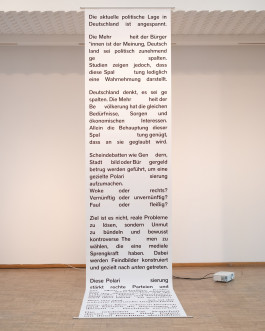
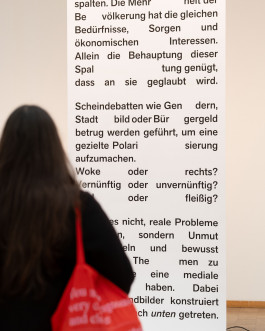
Inspired by the perception of an increasingly polarized society, our project explores this dynamic and asks: How can polarization become productive? The work stems from the observation of a society that seems to be split into two camps, drifting further apart. Yet these “two poles” cannot be measured empirically—they are constructed through narrative. Symbolically charged pseudo-debates are woven into this story, allowing those at the far-right fringe to consolidate power. By engaging with this mechanism, we aim to expose the absurdity of this situation while shifting the focus. In a society marked by unequal living conditions and financial resources, polarization can have a productive role: it makes inequality negotiable by reducing complexity and structuring communication. What we need are debates about living conditions, not symbols or identity. Inequality is politically shaped—and therefore changeable.
Individual Works:
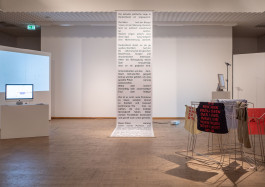
Very large poster — visualizes wealth inequality by representing assets as areas and putting them in proportion. Large numbers are abstract and hard to grasp, but the poster allows viewers to perceive the scale of wealth distribution.
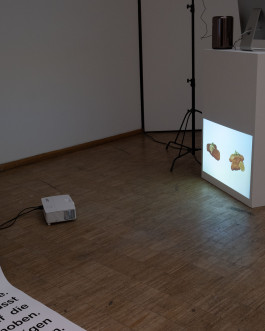
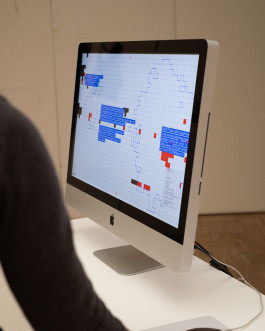
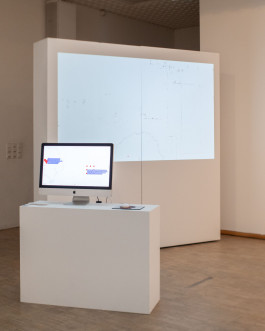
Billionsweeper — is an interactive game that makes enormous figures tangible. Players navigate a grid-based world, uncovering facts about wealth with each click. Revealed fields correspond to the amounts presented, while a projected overview gives a sense of the world’s scale.
GIF — while exploring differences, we found objects and attributes that currently polarize but are, in reality, socially constructed distinctions. The GIF displays these image pairs sequentially, inviting reflection rather than immediate comprehension.
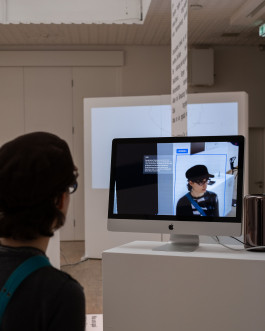
Sound installation — polarization is often experienced as repeated phrases or “killer arguments” in everyday discussions, leaving little room for response. Our immersive sound installation fills the room with our own voices, offering a counterpoint and reclaiming dialogue.
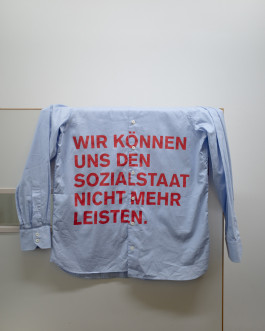
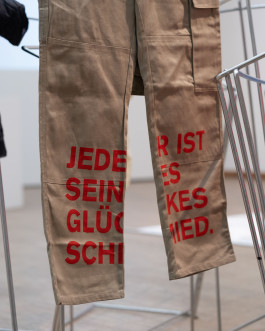
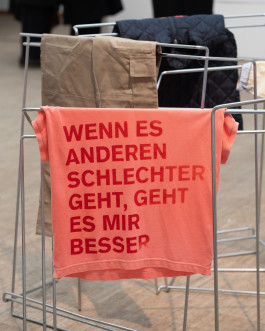
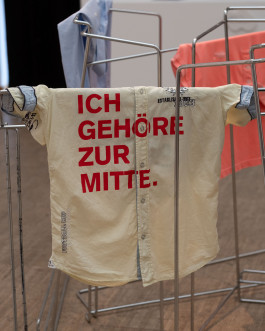
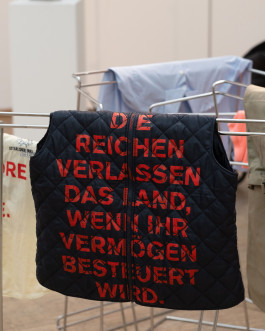
Economic Narratives — narratives often shape society more powerfully than facts. Economic narratives, for example, exist to legitimize the system and maintain existing hierarchies. The work investigates how these narratives are internalized and whose interests they serve.
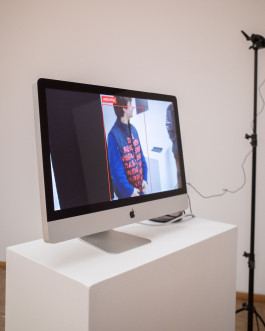
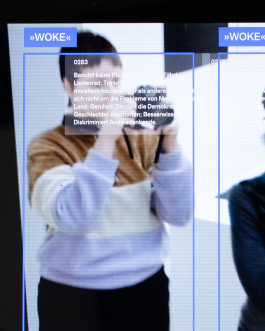
Woke-Detector — combines a pre-trained object recognition model with one we trained ourselves. Identified individuals are framed and labeled as either “woke” or “right-wing.” Random attributes are then assigned to reflect the assumptions each side projects onto the other, highlighting the constructed nature of polarization.