Blur is a blurry concept
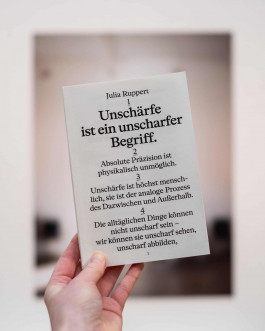
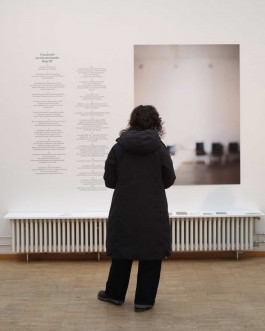
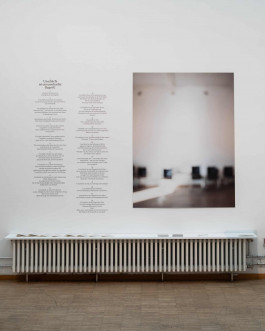
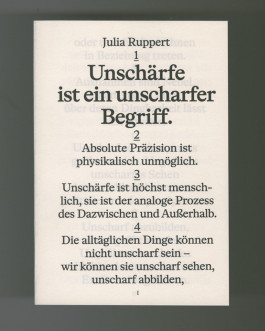
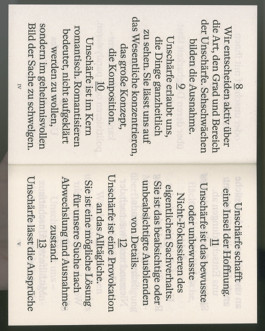
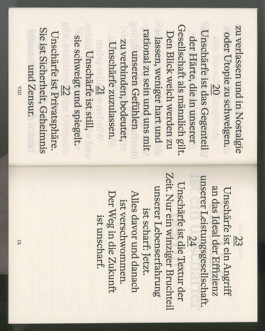
Blur cannot be considered in isolation. It only becomes visible in relation to references. The Manifesto of Blur first proclaims, loudly, the perspective from which this work speaks about the subject of blur. Thirty essayistic texts then examine the concept in four categories: seeing blur, depicting blur, being blur, and knowing blur. The texts do not follow a linear argument; instead, they approach blur from different directions and become fragments. The references used are a snapshot of thoughts, associations, and anecdotes that emerged from an intensive engagement with the topic of blur and from observing my everyday life. Alongside the textual work in the form of a book, a blurred image creates space for a moment of stillness. While the manifesto provokes and the texts contextualize, the image resists an illustrative function and clear readability, inviting instead a slowed-down mode of viewing. The title of this three-part work—and at the same time the first thesis of the manifesto—is Blur is a blurry concept. Accordingly, the aim of this work is not to define blur. Rather, it is an exploration of blur—not only as a design tool, but as a question of attitude. How do we want to encounter our world and one another, to assume responsibility—as designers, but also as individuals? Blur is an essential part of our lives; without it, we would not be human. At the same time, blur can become a danger to us—to our coexistence, to our democracy. This work therefore understands blur not merely as an escapist movement, but as a possible, active stance that regards conscious not-knowing, not-fixing, and the in-between as part of a responsible way of engaging with the world.